



Contents
The most common apostille and legalization mistakes are: a laminated document, an electronic extract instead of a paper one, trying to apostille USSR documents, confusing apostille with legalization and nostrification, inconsistent name spelling, and a missing apostille on the diploma supplement. Each costs time and money, but every one is avoidable before you submit. Here is how.
Mistakes 1–2: a laminated document and an e-extract instead of paper
Mistake 1 – a laminated document. An apostille is not placed on a laminated original: the authority must bind its stamp to the form itself, and the plastic film makes that impossible. The fix is to order a duplicate or a re-issued certificate from the issuing body and apostille that instead. Never laminate a document "to preserve it" if you plan to travel abroad.
Mistake 2 – an electronic extract where the authority requires a paper one. Extracts from state registries are often issued as PDFs, but the apostille goes on the paper document issued by an authorized institution, not on a printout. Before submitting, confirm the format with the receiving authority: some accept an e-document with a QR code, others require paper with a wet stamp.
Mistakes 3–4: USSR documents and confusing apostille / legalization / nostrification
Mistake 3 – apostilling USSR or foreign documents. Originals of documents issued by institutions of the former union republics within the USSR are not accepted for apostille by a Ukrainian authority. The ban does have an exception written into the Rules themselves: documents on education and academic degrees issued by the Ukrainian SSR. So a Soviet diploma can be apostilled, while a Soviet birth certificate cannot – that one needs a reissued document from the Ukrainian civil registry. A document of another state is apostilled by the state that issued it.
Mistake 4 – confusing three different procedures. The apostille is for Hague Convention countries; outside it, consular legalization applies (authority → MFA → embassy). Canada has accepted the apostille since 11 Jan 2024, and mainland China since 2023. With Poland, Czechia, Moldova and CIS countries a legal-assistance treaty applies: neither apostille nor legalization is needed – a notarized translation is enough. Nostrification is a separate recognition of a diploma in the destination country, not a stamp.
Mistake 5: inconsistent name spelling across translations and passport
If your surname is spelled differently in the translation than in your international passport, a foreign authority may treat these as two different people and refuse the document. The baseline rule: names are transliterated under Cabinet of Ministers Resolution No. 55 (зг→zgh; at the start of a word Є→Ye, Ї→Yi, Й→Y, Ю→Yu, Я→Ya; the soft sign and apostrophe are not rendered).
But if your current passport already uses a different spelling, the translator must match the passport version – consistency outweighs the formal rule. Before ordering a translation, provide the passport page with the Latin spelling of your name, and cross-check city and institution names the same way. A single letter mismatch sends the whole package back for redoing.
Mistake 6: a missing apostille on the diploma supplement
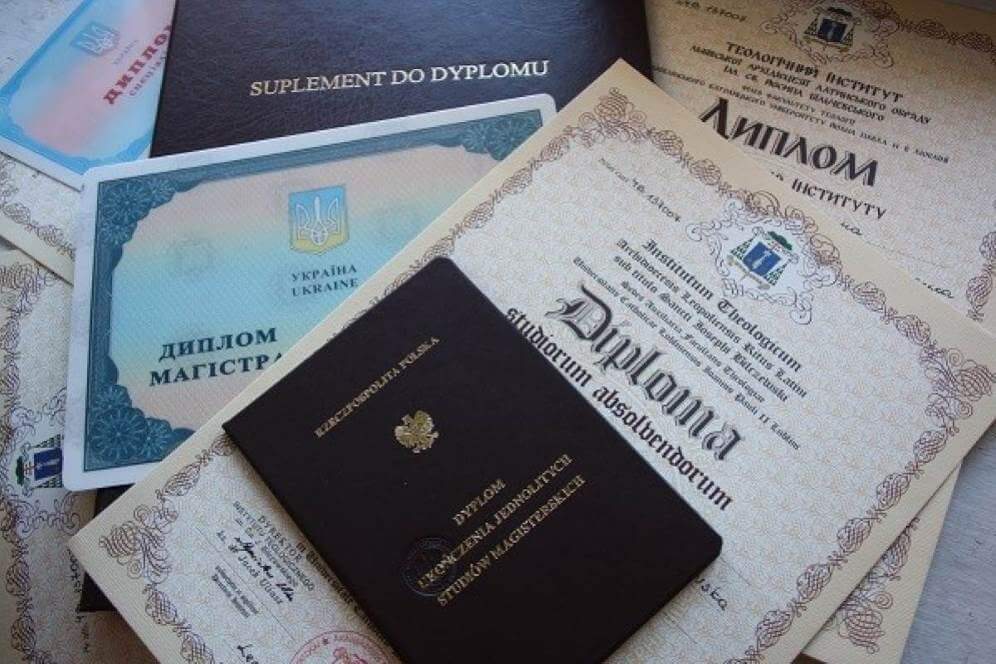
The diploma and its supplement (with grades) are two separate documents. The MES apostille is placed on each one, so the state fee is charged twice: from UAH 670 per document for individuals (from UAH 1,160 for legal entities), with a 5-working-day term (up to 20 if a request to the institution is needed). Very often clients apostille only the diploma, then find abroad that documents are not accepted without an apostilled supplement.
Check the requirements of the university or employer in advance: admission and nostrification almost always need both documents with an apostille and a translation. Order the apostille for the diploma and supplement together so you do not pay for rush rework later.
Not sure your document is ready to submit? Send us a photo and we will check it and arrange the apostille without the common mistakes.
Most rejections happen not because the procedure is hard, but because of simple oversights: lamination, the wrong document format, a name mismatch, or a missing supplement. Check these six points in advance – or let the Etalon bureau handle the prep, arranging the apostille remotely and submitting documents in Kyiv by power of attorney.