


Contents
What people call a "power of attorney for taking a child abroad" is legally a notarised statement of consent from one parent. A Ukrainian notary draws it up. For that document to be accepted abroad it usually needs an apostille and a translation into the destination country's language. Whether the consent is required in your particular case is decided by the current border-crossing rules and by the receiving country — that is a question for the notary and the State Border Guard Service. Our part begins once the document exists.
What the document is actually called
"Power of attorney" is the everyday name. What the notary issues is a statement of consent: one parent agrees in writing to the child travelling, and the notary certifies that the signature is genuine. This matters beyond formality, because the type of document decides the whole route that follows. A statement of consent is a notarial act, so it is apostilled exactly like any other notarial document. The consent itself usually names who the child travels with, to which country and for how long — which is why one document rarely covers the next trip.
The apostille: why the Ministry of Justice, not the MFA
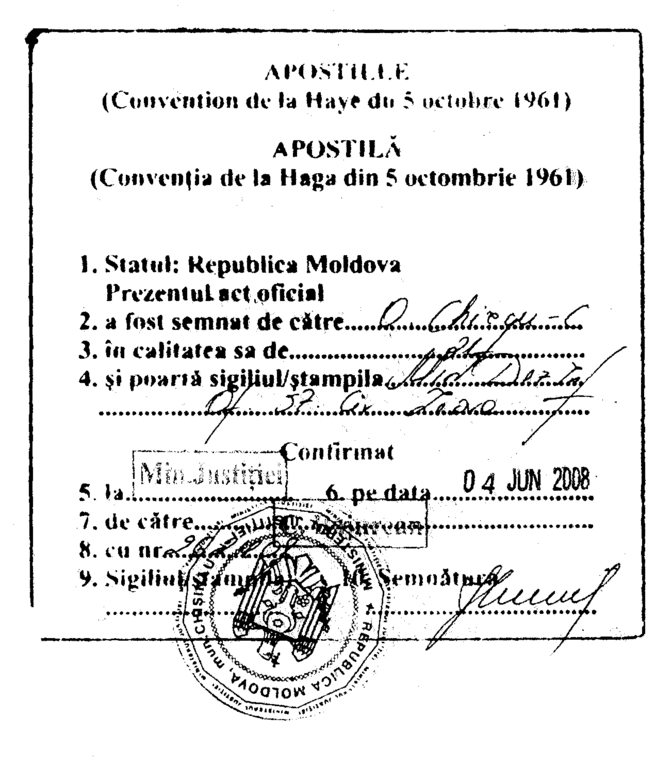
Because the consent is a notarial document, the apostille is issued by Ukraine's Ministry of Justice — not by the Ministry of Foreign Affairs or the Ministry of Education, which apostille other categories. For Hague Convention states an apostille is enough; outside it consular legalization is required. With Poland, Czechia, Moldova and several other countries a legal-assistance treaty applies, under which an apostille is de jure unnecessary — yet in practice the receiving institution often asks for one anyway, so check the requirements before you file.
Translation: when to do it and who certifies it
The order is notary, then apostille, and only then translation — that way the apostille stamp itself is translated too and the document travels as a complete set. The target language is the language of the destination country. In Ukraine we provide a notarized translation: the notary certifies the authenticity of the translator's signature, not the content. If the country requires a sworn translation, it must be done by a translator on that country's register — and those are translators we have in-house: Polish (tłumacz przysięgły), Czech (soudní překladatel) and German (vereidigter Übersetzer). We will tell you honestly what your case actually needs.
Source: Ministry of Justice apostille register · as of 2026
Consent already signed at the notary? We will apostille it and translate it for the country you need — apostille on a power of attorney at Etalon.
In short: call the document by its right name, have it apostilled by the Ministry of Justice and translated into the destination language — in that order. The first step is the notary's; the second and third are ours.