



Contents
An electronic apostille is an apostille that Ukraine's Ministry of Justice, from 01.02.2026 (Minjust order No. 3177/5), issues in the Electronic Apostille Register rather than as a paper stamp. For now it covers only documents within the Ministry of Justice's scope (notarial acts, court documents, civil-registry/ДРАЦС records), decisions are made within up to 3 working days, and authenticity is checked online at apostille.minjust.gov.ua. Whether a specific country accepts it depends on that country – confirm in advance.
What an electronic apostille is and how it differs from the paper one
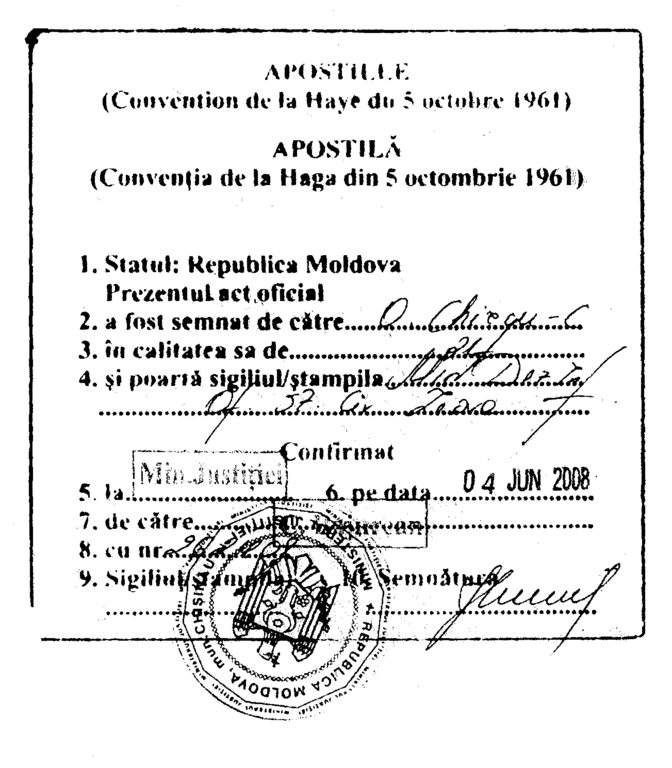
A paper apostille is a stamp physically affixed to the document itself or to an attached sheet; an electronic apostille exists as an entry in the Ministry of Justice's Electronic Apostille Register with a unique link for verification. Their legal force is identical – both confirm the authenticity of the signature and seal on the document, not the correctness of its content or translation. The key difference is practical: an electronic apostille cannot be "lost" and is verified instantly online, but only a country that recognises the electronic form will accept it. So the paper version remains the more universal option for submission abroad for now.
Which documents it covers and who issues apostilles at all
From 01.02.2026 the electronic apostille applies only to documents within the Ministry of Justice's scope: notarial acts, court documents and civil-registry/ДРАЦС records (birth, marriage certificates, etc.). Other authorities apostille as before and separately: the Ministry of Education (МОН) handles educational documents (diplomas, school certificates), the Ministry of Internal Affairs (МВС) handles criminal-record certificates, and the Ministry of Foreign Affairs (МЗС) handles medical and most other documents. The state fee is charged per ministry: at the Ministry of Justice from 01.01.2026 it is UAH 670 for individuals and UAH 1160 for legal entities, at the МВС about UAH 51/85, while МОН and МЗС have their own tariffs (so do not apply the UAH 670 figure to a diploma). Important: an electronic criminal-record extract cannot be apostilled – you need the paper version, and the МВС places the apostille on it.
How to verify an electronic apostille and when it is accepted abroad
The authenticity of a Ministry of Justice electronic apostille is verified online at the official portal apostille.minjust.gov.ua by its number and register data – this confirms the entry exists and is valid. As for acceptance: the apostille as such is valid between all Hague Convention countries (Canada, for example, joined on 11.01.2024), but not every state yet recognises the electronic form specifically. So before submitting, check with the receiving authority or consulate whether they accept an electronic apostille or require a paper one. A transitional period runs until ~01.03.2026, during which both formats are available, so you can obtain the familiar paper stamp if needed.
Need an apostille and a sworn translation for a specific country – we help with apostille and document translation remotely across Ukraine.
The electronic apostille is a convenient step forward: a fast decision within up to 3 working days, online verification at apostille.minjust.gov.ua, and a stamp you cannot "lose". But for now it applies only to Ministry of Justice documents and is not accepted everywhere, so until the transitional period ends (~01.03.2026) follow the requirements of the specific country and take the paper version if needed. Our part is quoted as one figure before the work starts, with the ministry's charges already inside it; all rules and tariffs cited here are as of 2026. We can help prepare the documents and translation, but the receiving authority's final decision is beyond our control.